A crack in the wall can get your attention quickly.
You notice a line in the drywall that you don't remember seeing before. Maybe it's above a doorway, near a window, along the ceiling or somewhere on an exterior wall.
It's easy to jump to one of two conclusions: “It's nothing.” Or “Something is seriously wrong with my house.”
Neither conclusion should be automatic.
Homes and building materials can move and change over time. Temperature, humidity, normal settling, construction details, moisture and other conditions can all contribute to visible cracks.
The important thing isn't to diagnose a crack by looking at it once. It's to understand what you're seeing, document it and pay attention to whether anything is changing.
Here are four things homeowners should do when they notice a crack.
1. Pay attention to where the crack is located
Start with something simple: Where is it?
A crack in drywall may deserve different consideration than one visible in brick, concrete, masonry or the home's foundation.
Notice whether the crack is:
- Near a door or window
- Along a ceiling or wall joint
- In the middle of a wall
- Where two different materials meet
- Visible on the exterior of the home
- In concrete, brick or masonry
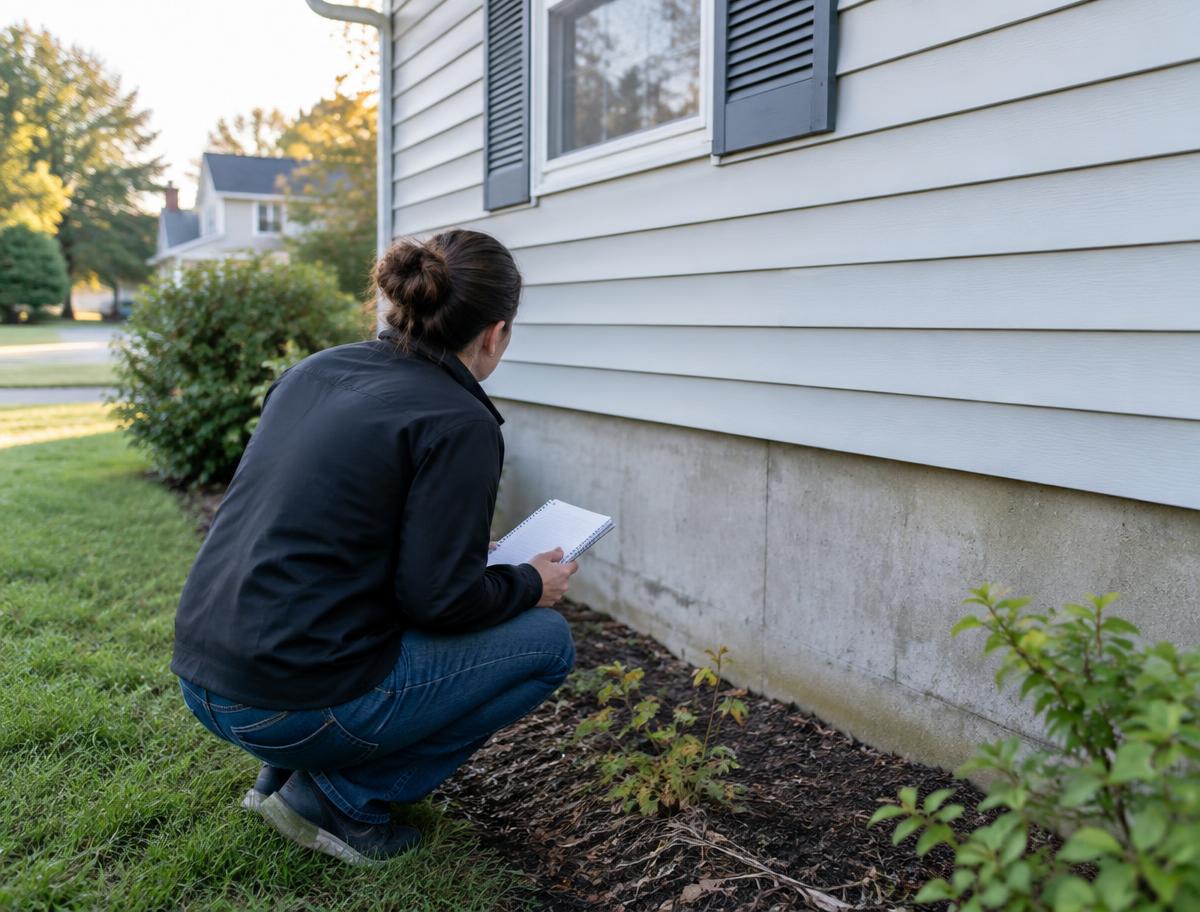
What to do: Photograph the crack and make a note of exactly where it is located. Don't rely on remembering what it looked like months later.
2. Look at the crack—and then look around it
The crack itself is only part of the picture.
Look around the surrounding area for other changes.
Are there additional cracks nearby? Have doors or windows started sticking? Do you see separation around trim? Has flooring changed noticeably? Is there staining, discoloration or another indication that moisture could be involved?
None of these observations automatically tells you what is happening. What they do is provide context.
One isolated cosmetic change may be very different from several changes appearing in the same area.
What to do: Look beyond the crack. Make note of other changes you observe nearby rather than trying to diagnose the problem from one visible symptom.
3. Determine whether it's changing
One of the most useful things you can learn about a crack is whether it remains the same or changes over time.
A photograph gives you something objective to compare later.
Include something for scale when practical, and record the date. If you're concerned about the crack, check it periodically and compare what you see with your earlier documentation.
Look for changes such as:
- Increasing length or width
- Additional cracks appearing nearby
- New separation around doors, windows or trim
- Changes in how nearby doors or windows operate
- New moisture or staining
What to do: Take a clear photograph, record the date and approximate location, and keep it with your home records. If the condition changes noticeably, you'll have useful documentation to show a professional.
4. Know when observation isn't enough
Some cracks remain unchanged for years. Others may warrant professional evaluation.
The difficulty is that homeowners generally can't determine the underlying cause simply from appearance.
If a crack is changing noticeably, appears suddenly, is accompanied by other significant changes in the home, involves structural materials, allows water intrusion or simply concerns you, consider having it evaluated by an appropriately qualified professional.
Depending on the situation, that could include a qualified home inspector, structural engineer, foundation professional or another appropriate licensed professional.
If there is an immediate safety concern, don't wait to monitor it.
What to do: When you're unsure, don't guess. Document what you've observed and provide that information to an appropriate professional who can evaluate the actual conditions.
The bigger lesson
A crack isn't something to panic about, but it isn't something to blindly ignore either.
Your house changes over time. Part of responsible homeownership is learning to notice those changes.
Observe. Document. Compare. Ask questions.
You don't have to become a structural expert. You simply need enough awareness to recognize when something is different and enough documentation to help someone qualified understand what you've been seeing.
That's the same approach behind Before You Buy the House:
Anticipate. Ask. Document. Verify.
Before you ignore that crack: 6 things to check
- Where is the crack located?
- Is it new, or has it been there for some time?
- Does it appear to be changing?
- Are there other cracks or visible changes nearby?
- Are doors, windows, floors or surrounding materials behaving differently?
- Have you photographed and documented what you're seeing?
You don't need to diagnose the crack. You need to notice when your home is telling you something has changed.
Home conditions can vary, and a visible crack alone may not reveal its cause or significance. When a situation calls for professional evaluation, consult an appropriately qualified professional.